

Last Updated on August 12, 2025 by Bilingual Kidspot
When I first started Bilingual Kidspot, my kids were babies, barely stringing two words together, let alone switching between languages. I was a new mum living in a foreign country and missing my family while navigating nap times, nappy blowouts, and temper tantrums. But one thing I was sure of? I wanted to raise bilingual children.
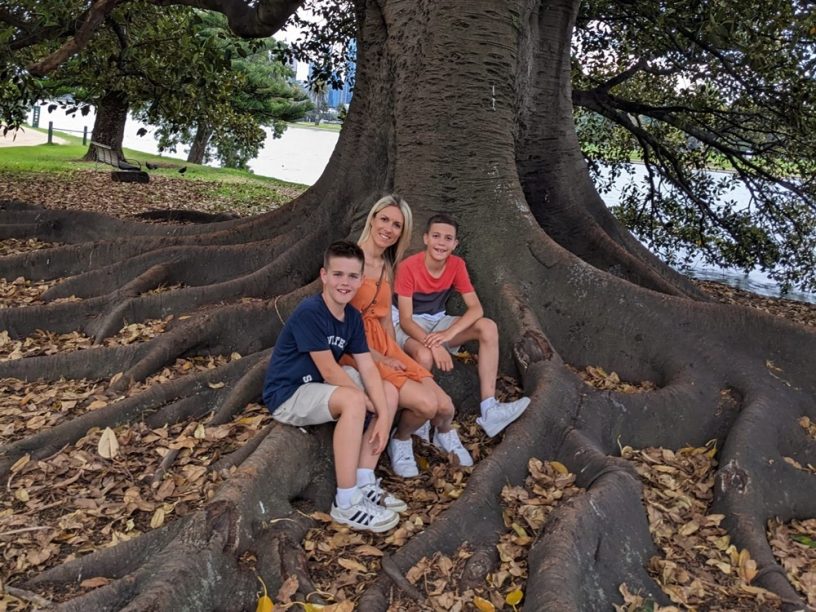
Fast forward to today, my kids are now 13 and 11 years old. That’s over a decade of bedtime stories in two languages, code switching, grammar debates, and more than a few moments wondering “Is this even working?”
Looking back, the journey has been far from perfect, but it’s been incredibly rewarding. So here it is: my honest reflection after 13 years of raising bilingual kids. What worked, what didn’t, and what I wish I’d known when I started.
The Early Years: Singing, Storybooks & Second-Guessing
At the start of our parenting journey my husband and I were all in. We were living in Italy and we followed the One Parent, One Language (OPOL) method. We each spoke in our native languages, I spoke in English, my husband spoke in Italian and we tried to stick to it religiously.
I filled our bookshelves with multilingual picture books, we sang songs in both languages and we tried to create a multilingual household.
Some days were magical, my toddler repeating a new word with perfect pronunciation. Other days, he’d flat-out refuse to answer in the “minority language,” and I’d question everything.
What I’ve learned? Those moments of resistance are normal. Language learning isn’t linear, and toddlers aren’t robots.
We introduced Spanish as a third language when my eldest was 3 years old, using the same method OPOL. We had a Spanish speaker come and play with the kids a few hours a week. It didn’t take long for my eldest to pick it up and start speaking, sometimes we couldn’t even understand him because we didn’t speak Spanish ourselves.
School Age: The Real Test Begins
This was a tricky stage for us as we moved to Australia when my oldest was about to start school, so their dominate language was Italian and their whole world was turned upside down.
We thought it would be difficult for the kids as they were only used to speaking English with myself, however English quickly took over. Friends, teachers, media, it was all in English. Suddenly, maintaining Italian became a lot more work even though Italian was their mother tongue at that point. And Spanish? We had no idea how we were going to continue with that.
We had to get creative:
- Weekend Skype calls with grandparents in Italy
- Audiobooks in Italian in Spanish
- Italian activity books
- Summer trips back to Italy when we could
- Spanish school on Saturdays (which was working until the pandemic hit and there were no longer classes)
Consistency helped, but so did flexibility. I stopped obsessing over perfect grammar or “correcting” every mistake. Instead, we focused on keeping the language alive and enjoyable.
Now: Teens, Identity, and Language Confidence
At 13 and 11, I’m proud to say that both of my kids are bilingual. While English is the more dominant language, (understandable as we live in Australia), they also speak Italian to a native level.
My oldest can read and write in Italian, while my youngest is getting there, though he’s a bit more resistant when it comes to writing. Still, their ability to switch effortlessly between languages is something I could only dream of when we started this journey.
Along the way, we did lose a lot of Spanish as it wasn’t a consistent focus for a while, but we’ve recently brought it back as a family. Using language apps like Duolingo, we’ve made it fun and interactive to learn together, and it’s created a sense of teamwork around language learning that we didn’t have before as none of us are native speakers.
Most importantly though, both kids identify as bilingual. They’re proud of their languages and what they represent. And honestly, that confidence and cultural awareness matter just as much, if not more, than perfect grammar or spelling.
Teenagers need purpose. If the language isn’t tied to friendships, music, memes, or real-life connection, it fades.
What I’ve Learned (So Far)
- Bilingualism is a long game. You won’t see instant results, and that’s okay.
- Language isn’t just vocabulary. It’s emotion, connection, identity.
- Kids will go through phases. Sometimes they’re all in. Sometimes they push back. Keep going.
- You don’t need to be perfect. What matters is consistency. Speaking. Listening. Creating opportunities for learning and immersion.
Looking Back
People often ask me, “What would you do differently?” Honestly, not much. Maybe I would have tried a bit harder with Spanish however Italian and English were more important to us at the time.
We did what we could, with the tools and knowledge we had at the time. We made bilingualism a priority, and while it wasn’t always perfect, we stayed consistent and intentional. And that made all the difference.
I wouldn’t change our approach. We created a bilingual environment that was natural, loving, and sustainable. And seeing my kids confidently use their languages today makes all those years of effort completely worth it.
The Journey Isn’t Over
Bilingualism doesn’t have a finish line. Even now, we’re still learning, still adapting. And while like most kids mine may not be perfectly balanced bilinguals (is anyone, really?), they have a strong connection to their languages, cultures, and heritage.
And that, to me, is a success.
To those just starting out: You’ve got this. It won’t always be easy—but it’s so, so worth it.
If you’ve been on this journey too, I’d love to hear what’s one thing you’ve learned about raising bilingual kids?
Raising bilingual kids? Follow us on Facebook and join the Bilingual Kidspot Discussion group!

Leave a Reply